Greenwich Museums: A Complete Guide To The Best Museum Cluster In London
Greenwich packs a royal park, a riverside palace, a tea clipper and the home of time itself into one compact, walkable loop, and two of its five big sights cost nothing to enter.
 By James Whitfield, London Museums And Travel Writer
Short answer
Greenwich has five major attractions: the National Maritime Museum and the Queen's House are free to enter, while the Cutty Sark (GBP 22), the Royal Observatory (GBP 24) and the Painted Hall charge admission. All five sit within a ten-minute walk of each other, reached by DLR, train or Thames boat.
Greenwich is the only part of London where you can stand on the Prime Meridian, walk the deck of a 19th-century tea clipper, and see the painting that has been called the Sistine Chapel of England, all without leaving a single royal park. The cluster sits on a bend in the Thames about five miles east of central London, and it works as a day out in a way few museum districts anywhere manage: five major attractions, two of them completely free, connected by a ten-minute riverside stroll.
This guide walks through the whole cluster, what each site charges, how to reach Greenwich by boat, DLR or rail, and the order that makes the day flow. The short version: come by river for the arrival, do the paid sights in the morning, and give the free National Maritime Museum the afternoon, because it is the one people underestimate.
Why Is Greenwich London's Best Museum Cluster?
Greenwich concentrates a maritime museum, a royal palace-cum-art gallery, a surviving tea clipper, the Prime Meridian and a baroque painted hall inside one walkable riverside park, and unlike central London's museum quarters, two of its five headline sights are free. No other part of the city offers that density. South Kensington has three nationals within a quarter mile, but everything there sits behind the same busy Cromwell Road. Greenwich's sites wrap around an actual royal park with a hill view over the river, so the day out includes grass and sky rather than only galleries.
The cluster also has a single institutional home. Four of the five sites, the National Maritime Museum, the Queen's House, the Cutty Sark and the Royal Observatory, are run together by Royal Museums Greenwich, which means shared ticketing logic, consistent opening patterns and a combined day-out feel. The Painted Hall sits just next door within the Old Royal Naval College, a five-minute walk from all of them.
There is a practical bonus that surprises first-time visitors: most London museums are open on Mondays, unlike Paris or Amsterdam, and the Greenwich sites follow that pattern, so the cluster works on the day when other cities' visitors are stuck. If you are building a wider list of no-cost options, our free museums in London guide covers the twenty sites across the city that charge nothing, Greenwich's maritime pair among them.
Which Greenwich Museums Are Free And Which Cost Money?
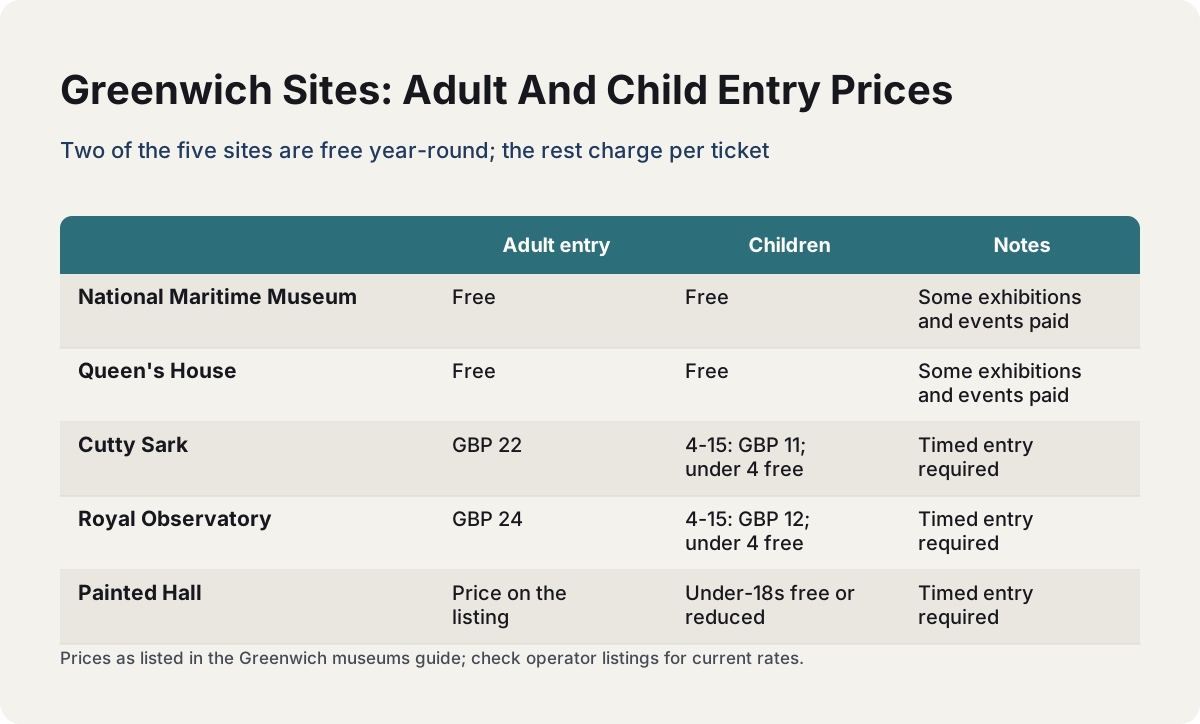
Two of the five Greenwich sites, the National Maritime Museum and the Queen's House, are free to enter year-round with no ticket needed for the permanent collections. The Cutty Sark charges GBP 22 per adult, the Royal Observatory GBP 24, and the Painted Hall sells its own separate ticket, with the current price on the operator's live listing. Free does not mean everything: both free museums still charge for some temporary exhibitions and events, so check what is on before assuming a blockbuster show is included.
Here is the full price picture at the door, using each venue's own standard adult rate. UK charity venues display a higher Gift Aid price beside these figures, which includes a voluntary donation; the numbers below are the standard prices, not the Gift Aid ones.
| Site | Adult entry | Children | Notes |
|---|---|---|---|
| National Maritime Museum | Free | Free | Some exhibitions and events paid |
| Queen's House | Free | Free | Some exhibitions and events paid |
| Cutty Sark | GBP 22 | 4-15: GBP 11; under 4 free | Timed entry required |
| Royal Observatory | GBP 24 | 4-15: GBP 12; under 4 free | Timed entry required |
| Painted Hall | Price on the listing | Under-18s free or reduced | Timed entry required |
For the paid three, a booking platform sells advance tickets for all of them, which matters because all three use timed entry. That single fact shapes the whole day more than any price does: you commit to a slot for the clipper, the Observatory and the Painted Hall, while the two free museums stay flexible around those anchors. The trio below covers the clipper, the Observatory and the Painted Hall in one place.
How Do You Get To Greenwich By Boat, DLR Or Train?
The fastest route is the train from London Bridge or Cannon Street to Greenwich station, about 20 minutes; the DLR serves Cutty Sark for Maritime Greenwich station from Bank or Tower Gateway; and the river boat from central London piers takes around an hour but delivers the best arrival of any museum trip in the city. There is no single right answer. Commuters take the train, families with children tend to love the DLR's front-seat views, and anyone with a spare hour should take the boat at least one way.
| Route | From | Rough journey | Why choose it |
|---|---|---|---|
| National Rail | London Bridge, Cannon Street | Around 20 min | Fastest from central London |
| DLR | Bank, Tower Gateway, Stratford | Around half an hour | Driverless trains, front-row seats |
| Thames boat | Embankment, Tower, Westminster piers | Around 60 min | The arrival itself is half the day out |
| Jubilee line + DLR | Waterloo, Bond Street | Roughly the same via the DLR | Handy from the South Bank |
The boat service, run as part of London's river transport network, departs from the main central piers and glides past the Tower, Docklands and the O2 before the Painted Hall's domes rise into view. Transport for London's river services page lists the current timetables and fares, and contactless payment works on board. The DLR is the everyday workhorse: Cutty Sark station drops you literally beside the ship, and the walk from Greenwich rail station to the National Maritime Museum takes about six minutes.
One planning note: the cluster is compact, so internal walking is trivial, but the Royal Observatory sits at the top of the park's hill. The climb from the National Maritime Museum takes about ten minutes uphill, which is worth knowing before you schedule it for the end of a long day. If you are staying south or east of the centre, the DLR from Stratford also serves the cluster directly, which makes Greenwich an easy add-on after a morning at the Olympic Park rather than a full-day commitment requiring a central departure.
Is The Royal Observatory Worth Its Ticket Price?
At GBP 24 for an adult, the Royal Observatory is the most expensive ticket in Greenwich, and it is worth it for one reason: this is the physical line where east meets west, where time zones begin, and where you can stand with one foot in each hemisphere. The meridian line in the courtyard is the draw, and it delivers. The rest of the visit, the Flamsteed House apartments, the historic telescopes and the time ball that still drops at 13:00 daily, gives the line its context rather than standing on its own.
The Observatory is also the reason Greenwich exists as a destination at all. It was founded in the seventeenth century so the Royal Navy could solve the longitude problem, and the story of how clockmaker John Harrison beat it is told inside the site's galleries. Children get the astronomy centre and planetarium shows, though shows are ticketed separately. Under-4s enter free and children aged 4 to 15 pay GBP 12.
Timed entry is required, and weekend afternoon slots go first, so booking ahead is the practical move. You can check availability for the Royal Observatory on the tour page, or go straight to the operator's live listing.
One honest caveat: the visit itself is not long. Most people spend an hour and a half to two hours, which makes the GBP 24 price feel steep per hour compared with the free museum downhill. Pair it with the view, the hilltop panorama over Docklands and the meridian photo, and the arithmetic improves. The operator's own pages at Royal Museums Greenwich list current opening hours and any planetarium schedule.
Is The Cutty Sark Worth Going Inside?
The Cutty Sark charges GBP 22 per adult and earns it: this is the world's sole surviving tea clipper, raised in dry dock with her hull visible beneath a glass sea, and you can walk the main deck, the tween deck and even the captain's cabin. Built in the nineteenth century for the China tea trade, the ship is the last of her kind anywhere, which is a claim almost no other single-ticket attraction in London can make. Children aged 4 to 15 pay GBP 11 and under-4s go free.
The raised-hull presentation is the clever part. Visitors walk underneath the ship in a glass-roofed space, looking up at the copper-alloy sheathing that once sliced through ocean on record-breaking runs. The displays inside cover the tea trade, the wool trade and the crew's quarters, and families consistently rate it highly: the tour listing shows 4.7 across 371 reviews, one of the strongest scores of any paid museum site in London.

The ship sits directly outside Cutty Sark DLR station, so it is usually the first or last thing visitors see in Greenwich, and either works. If you are weighing it against other family options, our London museums for kids guide puts it in context. Timed entry applies, so Check availability before you travel, especially on weekends.
Is The Painted Hall Worth The Entry Fee?
The Painted Hall, inside the Old Royal Naval College, is a single vast room whose walls and ceiling carry painted British history across two centuries of national mythology, completed across 19 years by James Thornhill, and it is the closest thing London has to a baroque chapel on the scale of continental Europe. The ceiling alone took Thornhill the better part of two decades, and the room has been called the Sistine Chapel of England often enough that the nickname has stuck. The current ticket price is on the operator's live listing, with under-18s free or reduced.
The hall was originally a dining room for pensioned sailors, and the painted scheme celebrates maritime power with William and Mary at its centre. After a major conservation project, the colors now read almost shockingly bright, and an included audio guide walks you through the allegories that would otherwise stay opaque. Most visits run about an hour, longer if you take the upper-deck viewing balcony, which puts you at eye level with the ceiling figures.
The hall sits between the Queen's House and the river, so it slots naturally into any route through the cluster, and advance booking is recommended because entry is timed. The tour listing carries 4.5 across 266 reviews, which reflects the near-universal reaction to the room itself. If painted interiors are your thing, our art museums in London guide covers where else in the city to find walls worth the trip.
What Should You Not Miss At The Free National Maritime Museum?
The National Maritime Museum is free to enter and holds the world's largest maritime collection: over two million objects spanning navigation, empire, exploration and sea power, including Nelson's coat from Trafalgar, still showing the hole from the bullet that killed him. That single artifact, displayed in the Nelson gallery, is the one thing nobody should miss, and it costs nothing to see. The museum sits at the heart of the cluster, between the Queen's House and the park.
The galleries divide into themes rather than eras: a Pacific encounters section, an Atlantic trade and slavery gallery, a polar exploration room with Scott of the Antarctic material, and the children's All Hands gallery for younger visitors. Temporary exhibitions charge separately, so the free entry covers the permanent collection, which is deep enough that two hours disappears easily. Under-18s enter free throughout.
Because it costs nothing, the museum is the cluster's natural buffer. Rain starts, you duck inside. Legs tire after the Observatory hill, you sit in its cafes. There is no ticket to waste, so you can leave and return, which is exactly how locals use it. For rainy-day planning across the whole city, our rainy day London museums guide ranks the best indoor options, and this one earns its place near the top.
What Is Inside The Queen's House?
The Queen's House is Greenwich's free art palace: an Inigo Jones-designed villa from the seventeenth century, the first classical building in England, now holding around 450 paintings including works by Turner, Hogarth, Gainsborough and the Canaletto views of the Thames, plus the famous Tulip Stairs, the first geometric self-supporting spiral staircase in Britain. Entry costs nothing, though some exhibitions and events inside are ticketed.
Architecturally it matters more than its modest size suggests. Jones modeled it on Italian villas at a time when England built nothing of the kind, and its cube hall and proportions launched English classicism. The art collection, managed as part of the national maritime art holdings, leans on seascapes and river scenes, which ties the building back to the cluster's theme. The Tulip Stairs photograph is the souvenir shot most visitors leave with.
The house sits directly behind the National Maritime Museum, and the two share a lawn, so the walk between them takes under a minute. Give the Queen's House three-quarters of an hour unless a paid exhibition pulls you longer, and treat it as the calm interlude between the Observatory hill and the Painted Hall. Because it is free, it is also the cluster's best bad-weather insurance: a sudden shower costs you nothing here, while it would waste a timed slot at one of the paid sites.
How Long Should You Spend In Greenwich And In What Order?
A full Greenwich day runs six to eight hours comfortably: arrive by 10:00, do the Royal Observatory first while legs are fresh, descend to the Cutty Sark, lunch near the market, then give the National Maritime Museum and Queen's House the afternoon, finishing with the Painted Hall before a boat ride back. The order matters mainly because of the hill: climbing to the Observatory at 4pm after five hours of walking is the mistake most first-timers make.
| Time | Stop | Cost | Time needed |
|---|---|---|---|
| 10:00 | Royal Observatory | GBP 24 | 1.5-2 hours |
| 12:00 | Cutty Sark | GBP 22 | 1-1.5 hours |
| 13:30 | Lunch near Greenwich Market | Varies | 1 hour |
| 14:30 | National Maritime Museum | Free | 1.5-2 hours |
| 16:30 | Queen's House | Free | Under an hour |
| 17:15 | Painted Hall | Price on the listing | About an hour |

Families should flip the order and start with the Cutty Sark, since children's attention peaks early, then let the free museum absorb whatever energy remains. If you only have half a day, pick the Observatory plus one free museum and skip the rest; a rushed Painted Hall is a wasted ticket. Greenwich also pairs naturally with the royal palaces further out, and our day trips from London palaces guide shows how to combine it with Hampton Court or Windsor on a longer itinerary.
However you sequence it, book the paid three in advance. All three use timed entry, and the listings below cover the whole trio in one place.
Common Questions About Greenwich Museums
Which Greenwich museums are free?
The National Maritime Museum and the Queen's House are free to enter year-round, covering their permanent collections. Both still charge for some temporary exhibitions and events, so check what is showing before you visit.
How much does it cost to visit the Cutty Sark?
The Cutty Sark charges GBP 22 per adult at the door, with children aged 4 to 15 paying GBP 11 and under-4s free. Advance tickets are also sold through a booking platform, from $29.80, and timed entry applies.
How much are tickets to the Royal Observatory?
The Royal Observatory charges GBP 24 per adult, with children aged 4 to 15 paying GBP 12 and under-4s free. Timed entry is required, so booking ahead is recommended, especially for weekend afternoons.
Can you do Greenwich in half a day?
Yes, if you choose two or three sites rather than all five. The Observatory plus the National Maritime Museum, or the Cutty Sark plus the Painted Hall, fit comfortably into four hours, and the free museums can absorb any spare time at no cost.
What is the best way to get to Greenwich from central London?
The train from London Bridge or Cannon Street is fastest at around 20 minutes. The DLR serves Cutty Sark station, and the Thames boat from central piers takes around an hour but gives the best arrival of the three.
Is the Painted Hall included with the Old Royal Naval College?
The Painted Hall is the Old Royal Naval College's main paid attraction and sells its own timed ticket, with the current price on the operator's live listing. Under-18s enter free or at a reduced rate.