Best Art Galleries In London: Free National Collections And Paid Gems
London splits its art between five free national collections and a handful of paid independents, and knowing which is which saves both money and time.
 By James Whitfield, London Museums And Travel Writer
Short answer
Five of London's major art galleries are free to enter: the National Gallery, Tate Modern, Tate Britain, the National Portrait Gallery and the V&A. Paid independents include the Courtauld Gallery, Moco Museum and Leighton House. Temporary exhibitions still charge at the free venues, so budget for those separately.
Twenty of London's forty-eight museums charge nothing to enter, and five of the best free ones are art galleries. That single fact reshapes how you should plan any art trip to this city, because the question is rarely whether you can afford to see great painting here. It is which building holds the work you actually want to stand in front of, and whether that particular building is one of the free nationals or one of the small paid independents.
This guide organises London's art offer by what you want to look at, not by institution size or fame. The nationals are staggeringly large and cost nothing. The independents are compact, charge a modest fee, and often deliver a better hour of looking than a rushed sprint through a collection the size of a village.
What Are The Best Art Galleries In London?
London's best art galleries split into two camps: five free national collections (the National Gallery, Tate Modern, Tate Britain, the National Portrait Gallery and the V&A) and paid independents such as the Courtauld Gallery, the Moco Museum and Leighton House. The right choice depends on what you want to look at, not on how famous the building is.
The free nationals cover almost the entire history of art between them. The National Gallery holds European painting from the 13th to the 19th century, Tate Modern covers international modern and contemporary work, Tate Britain tracks the British story, the National Portrait Gallery hangs faces from Tudor times to now, and the V&A gathers design, sculpture, fashion and decorative art under one enormous roof in South Kensington.
The paid independents are specialists. The Courtauld Gallery at Somerset House holds one of the world's great Impressionist and Post-Impressionist collections in a building you can see in ninety minutes. The Moco Museum near Marble Arch plays modern icons and digital art to a younger crowd. Leighton House in Kensington is the preserved home and studio of a Victorian painter, complete with its famous Arab Hall. Each charges a door fee, and each earns it.
A sensible rule of thumb: use the free nationals for breadth, and pay for the independents when a specific collection or atmosphere appeals to you. A visitor who tries to "do" the National Gallery and Tate Modern in one day usually ends up with sore feet and blurry memory. A visitor who picks one wing of one gallery, then spends an hour at the Courtauld, comes away with paintings they can actually name. London Museums covers all of these venues individually, but this page is where the comparisons live.
Which London Art Galleries Are Free To Enter?
The National Gallery, Tate Modern, Tate Britain, the National Portrait Gallery and the V&A are all free to enter, year-round, with no ticket needed for their permanent collections. What still costs money is the temporary exhibition programme at each one. The Courtauld, Moco Museum and Leighton House charge for everything.
Free here means genuinely free, not free-with-asterisk. You walk into the National Gallery on Trafalgar Square, past the fountains and the lions, and straight up to the Van Goghs without paying a penny, as the gallery's own site confirms for general admission. The same applies at both Tate buildings, at the National Portrait Gallery next door to the National Gallery, and at the V&A on Cromwell Road. No timed ticket, no suggested donation you have to decline out loud, no queue for a free pass.
What still costs money is the exhibitions programme. When Tate Modern stages a major retrospective, or the National Gallery brings in a loan show, that ticketed exhibition sits inside the free building and charges separately. Prices vary by show, so check the current exhibition ticket on each gallery's own site rather than budgeting from memory.
| Gallery | Entry | What still costs money |
|---|---|---|
| National Gallery | Free | Some special exhibitions and events |
| Tate Modern | Free | Temporary exhibitions |
| Tate Britain | Free | Temporary exhibitions |
| National Portrait Gallery | Free | Some exhibitions and events |
| V&A | Free | Some exhibitions and events |
Advance booking is recommended at busy periods even for free entry, especially at the National Portrait Gallery and the V&A's blockbuster shows, but a free timed ticket is still a free ticket. If you are building a whole trip around no-cost culture, the site's guide to free museums across London lists the other fifteen free venues too, from the Wallace Collection to the Imperial War Museum.
For visitors who want structure rather than a self-guided wander, the National Gallery also sells guided tours and exhibition experiences through the live listing, from $27.09, currently rated 4.3 across 196 reviews. Those tickets are for the tours, not for entry: the collection itself remains free, so treat a paid tour as an upgrade rather than a requirement.
Which Paid Art Galleries Are Worth The Ticket Price?
The Courtauld Gallery, Moco Museum and Leighton House are the three paid independents most worth a ticket. Moco charges GBP 16.9 at the door, Leighton House GBP 14, and the Courtauld's door price is on its own site with bookings from $18.97 on the live listing. All three are small enough to see in under two hours.
The Moco Museum, a short walk from Marble Arch, is the most divisive of the three and the most fun. Its collection leans on modern icons, street art names and digital installations, and the crowd skews younger than any other gallery in this guide. Adult entry is GBP 16.9 at the door, children up to 4 enter free, and timed entry applies, so booking ahead genuinely saves a wait. On the live listing, tickets start from $31.02 and the venue carries 4.7 across 505 reviews, one of the strongest ratings on this site's entire roster.
The Courtauld and Leighton House reward a different kind of visitor. The Courtauld packs Manet, Monet, Van Gogh and Cezanne into Somerset House's elegant rooms, and its small size means you can see the highlights properly rather than sampling them. Leighton House is quieter still: the Arab Hall, with its gilded dome and tiled walls, is one of the most beautiful rooms in London, and the studio upstairs tells you exactly how a successful Victorian painter lived. Children under 6 get in free at Leighton House, ages 6 to 18 pay GBP 6.
If the Moco Museum sounds like your kind of afternoon, the practical details are on the Moco Museum tickets and tours page, and you can Check availability for your dates before travelling. Slots on weekend afternoons fill first, and the timed-entry system means an unbooked walk-up can mean waiting for the next window.
Where Should You Look At Old Masters And Impressionists?
For Old Masters, the National Gallery on Trafalgar Square is the free default, holding one of the world's strongest collections of European painting from the 13th to the 19th century. For Impressionists, the Courtauld Gallery at Somerset House is the specialist: Manet, Monet, Van Gogh and Cezanne in a single compact building.
The National Gallery's strength is depth across six centuries. Botticelli, Titian, Velazquez, Rembrandt, Turner and Constable all hang here, alongside Van Gogh's Sunflowers and Seurat's Bathers at Asnieres. Entry costs nothing, under-18s are free, and the Sainsbury Wing's layout lets you walk the collection chronologically, starting with medieval altarpieces and ending in the 19th century. Give it a full morning at minimum, and pick two or three rooms to see slowly rather than skimming all of them.
The Courtauld Gallery is where the Impressionist hunters should go. Its collection is small by national standards but almost unfairly concentrated: Van Gogh's self-portrait with a bandaged ear, Manet's A Bar at the Folies-Bergere, Cezanne's Card Players and a wall of Monet are all within a few steps of each other. The gallery's own collection pages let you preview exactly what is on show before you commit. Under-18s visit free or at a reduced rate, advance booking is recommended, and timed entry applies.
For a paid shortcut through either collection, guided visits are bookable through the live listing, with Courtauld experiences from $18.97 and a 4.6 rating across 182 reviews. Full details are on the Courtauld Gallery tickets and tours page. A tour is optional at both venues; the paintings are the main event.
Where Do You Find Modern And Contemporary Art?
Tate Modern on Bankside is the free home of modern and contemporary art, with no booking needed for the collection, and its turbine hall commissions change regularly. The Moco Museum near Marble Arch is the paid, playful alternative, focused on modern icons and digital art, with timed entry and tickets from $31.02 on the live listing.
Tate Modern sits in a converted power station on the Thames, and the building alone justifies the walk across the Millennium Bridge. Inside, the free collection runs from Picasso and Matisse through to film, installation and performance work, and the vast turbine hall at ground level hosts a single monumental commission at a time. Tate's own site confirms that no booking is required for the collection, though temporary exhibitions charge separately. Under-16s enter free; exhibitions offer concessions.
If Tate Modern is the cathedral of modern art, the Moco Museum is the side street with better music. Its rooms mix recognisable modern names with digital and immersive pieces, the whole visit takes about an hour, and the door price of GBP 16.9 buys something the free nationals cannot match: an experience built for sharing rather than silent study. Visitors who want both can do Tate Modern in the morning and Moco in the afternoon without exhausting themselves.
Tate Britain, upstream at Millbank, is the third piece of the modern puzzle, though its heart belongs to British art from Tudor portraits to the present. It is also free for the collection, with no booking required, and its Clore galleries hold the world's largest group of Turner paintings. A riverboat runs between the two Tates, which turns a gallery transfer into one of the better boat rides in London.
How Much Do London Art Galleries Cost?
Entry to the five national art collections costs nothing: the National Gallery, both Tates, the National Portrait Gallery and the V&A. Paid independents run from GBP 14 at Leighton House and the Museum of Brands to GBP 16.9 at Moco. Temporary exhibitions at free venues are priced separately, typically announced per show.
The full price picture is short enough to memorise. Nothing on the national side requires money for the permanent collections. On the independent side, the fees are modest by the standard of any other major European capital, and several venues discount or waive the fee for children.
| Gallery | Standard adult entry | Children | Notes |
|---|---|---|---|
| National Gallery | Free | Under-18s free | Exhibition tickets priced per show |
| Tate Modern | Free | Under-16s free for collection | Exhibitions charge separately |
| Tate Britain | Free | Under-16s free for collection | Exhibitions charge separately |
| National Portrait Gallery | Free | Under-18s free or reduced | Booking recommended for exhibitions |
| V&A | Free | Under-18s generally free | Exhibitions charge separately |
| Moco Museum | GBP 16.9 | Up to 4 free | Timed entry; from $31.02 on the live listing |
| Leighton House | GBP 14 | Under 6 free; 6-18 GBP 6 | Kensington, near Holland Park |
| Courtauld Gallery | Price on its own site | Under-18s free or reduced | From $18.97 on the live listing |
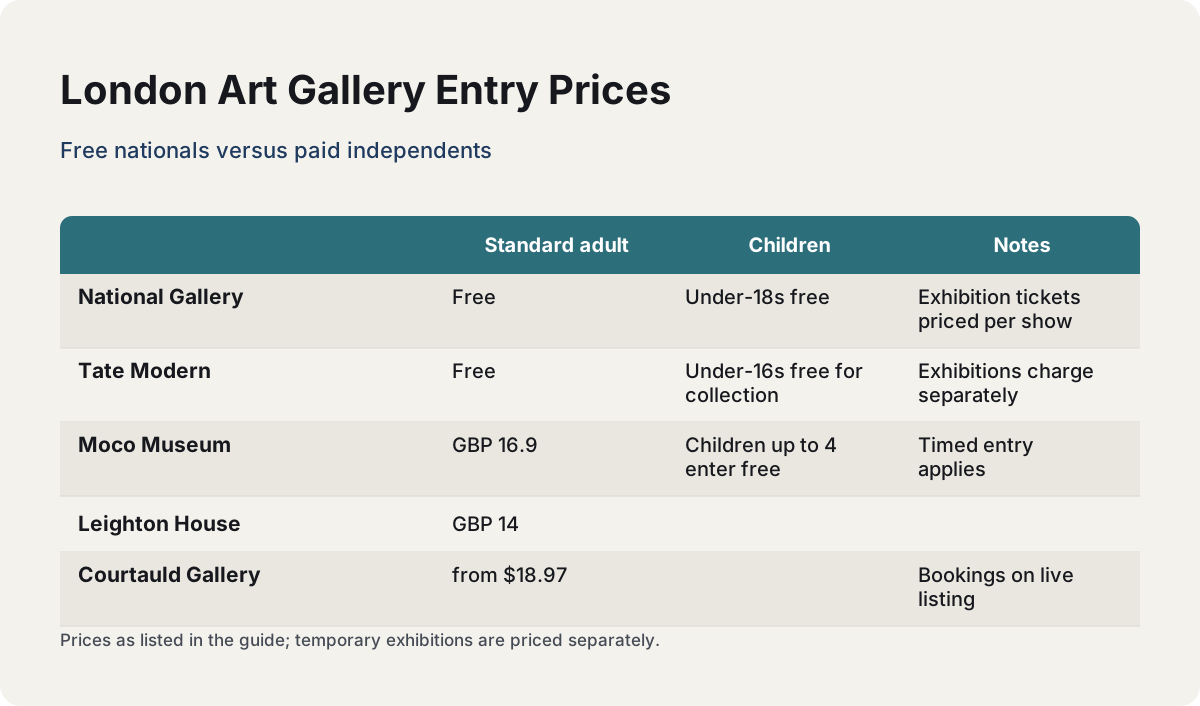
One warning worth repeating: never read the Gift Aid figure on a UK ticket page as the admission price. It includes a voluntary donation, and the standard price beside it is what you actually have to pay. Where this site does not quote a door figure at all, the honest answer is to check the current price on the venue's own site.
Which Art Gallery Should You Choose For A First Visit?
For a first visit, pick the National Gallery if you want famous names in the centre, Tate Modern if you want scale and spectacle, and the Courtauld if you prefer one great collection in a quiet building. First-timers with children should lean toward the V&A or the National Portrait Gallery, both free and both walkable.
The decision is easier if you match the gallery to the mood rather than the guidebook ranking. Someone who wants to come home saying "I saw the Van Gogh" goes to the National Gallery. Someone who wants to be surprised goes to Tate Modern. Someone with two hours before dinner goes to the Courtauld. And someone travelling with a bored twelve-year-old goes to the V&A, where the fashion galleries, the jewellery galleries and the plaster casts give everyone something to argue about.
| If you want to see... | Go to | Entry |
|---|---|---|
| Van Gogh, Monet, Cezanne up close | Courtauld Gallery | Paid |
| Botticelli, Turner, Rembrandt | National Gallery | Free |
| Monumental contemporary installations | Tate Modern | Free |
| Portraits across British history | National Portrait Gallery | Free |
| Fashion, design and sculpture | V&A | Free |
| Street art names and digital pieces | Moco Museum | Paid |
Rain changes the maths a little. All of these venues are indoors, but the smaller ones fill faster on wet Saturdays, and the nationals handle weather-driven crowds better simply because they are bigger. For a fuller list of wet-weather options, the guide to rainy day museums in London ranks the rest of the city's indoor collection.
How Do You Plan A Perfect Art Day In London?
Group galleries by neighbourhood: Trafalgar Square pairs the National Gallery with the National Portrait Gallery, a short walk from the Courtauld at Somerset House. South Kensington puts the V&A beside two more free museums. Bankside gives you Tate Modern, with Tate Britain a riverboat ride away. One cluster per day keeps legs intact.
The Trafalgar Square cluster is the strongest single art day in the city. Start at the National Gallery when the doors open, take the National Portrait Gallery next door as a light second course, then walk fifteen minutes along the Strand to the Courtauld for the Impressionists. Two free venues and one paid, all within a triangle you can cross in twenty minutes on foot.
| Cluster | Galleries | Suggested time |
|---|---|---|
| Trafalgar Square and Somerset House | National Gallery, National Portrait Gallery, Courtauld | Full day |
| South Kensington | V&A, plus the Natural History and Science Museums | Half day to full day |
| Bankside and Millbank | Tate Modern, Tate Britain | Full day with the riverboat between |
South Kensington is the family cluster, with the V&A as the anchor and two more free museums on the same street; the guide to South Kensington's museum quarter breaks down how to split the day. If you are staying longer than a weekend, the site's three-day London museum itinerary already sequences these clusters into a walkable plan, art days included.
A Free Walk That Passes These Museums
Not every way to see London costs money. A free, pay-what-you-want walking tour passes National Gallery: London Essentials - London in under two hours Free Walking Tour runs 2h and is rated 4.78 across 5,239 reviews. It meets at Wellington Arch at Hyde Park Corner, on the raised grass about fifty feet from the arch. The guide carries a black umbrella and a name tag reading Theo. Booking costs nothing and the guide is tipped at the end, which is the arrangement rather than a hidden charge. There are 48 of these walks across London, and another covers a different part of the centre.
Common Questions About Art Galleries In London
Are The Big London Art Galleries Really Free?
Yes. The National Gallery, Tate Modern, Tate Britain, the National Portrait Gallery and the V&A all charge nothing for their permanent collections, year-round, with no ticket needed. Only their temporary exhibitions cost money, and those prices are announced per show on each gallery's own site.
Which London Art Gallery Should I Visit If I Only Have Time For One?
Choose the National Gallery for the broadest hit of famous European painting, or Tate Modern if contemporary art appeals more. Both are free, so the only cost of choosing wrong is an hour, and both sit within a short walk or Tube ride of the other major venues.
Do I Need To Book Tickets In Advance For London Art Galleries?
The free nationals need no booking for their collections, though a free timed ticket is recommended at busy periods at some venues. The paid independents, including the Moco Museum and the Courtauld, use timed entry, so booking ahead is the safer play there, especially on weekends.
Is The Moco Museum Worth The Ticket Price?
At GBP 16.9 for a standard adult, Moco is worth it for visitors who enjoy modern icons, street art and digital installations in a compact, energetic space. It holds 4.7 across 505 reviews on the live listing. Visitors who prefer Old Masters will get more from the free National Gallery.
Can You See The Courtauld Gallery And The National Gallery On The Same Day?
Yes, comfortably. The National Gallery sits on Trafalgar Square and the Courtauld at Somerset House, about fifteen minutes apart on foot. A morning in the National Gallery followed by an afternoon at the Courtauld, with the National Portrait Gallery in between, is one of the best art days in London.
Are Children Free At London Art Galleries?
At the free nationals, yes, under-18s generally enter at no cost. At the paid independents the policies vary: under-18s are free or reduced at the Courtauld, children up to 4 are free at Moco, and Leighton House charges GBP 6 for ages 6 to 18 with under-6s free.