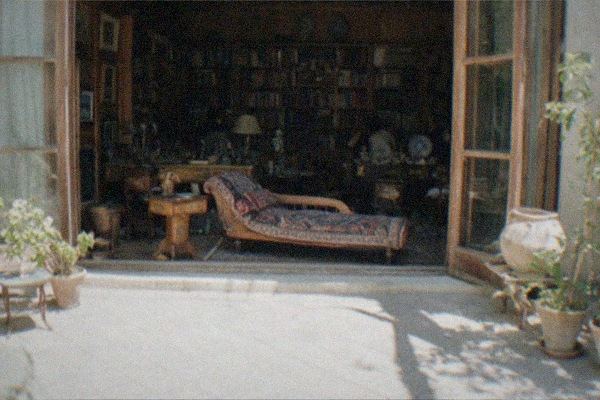
Freud Museum
Hampstead · Iconic psychoanalytic couch and Anna Freud's contributions.
Sigmund Freud's final home with study, couch, and antiquities collection.
from $20.18per person, live price on the listing Check availability →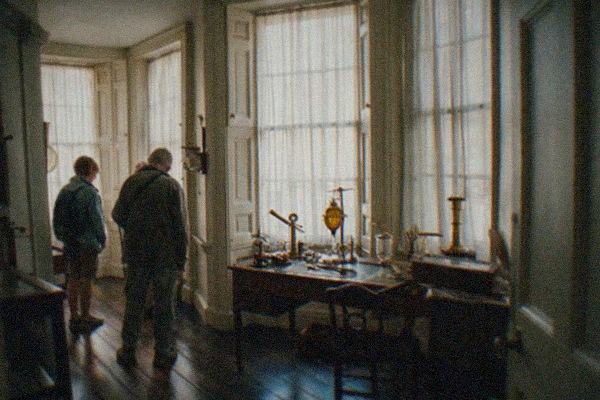
Site of scientific experiments and diplomacy.
Current admission is on the museum's own ticket page.
Official tickets →Opens the museum's own website. Book on the official site; nothing is charged on this page.
Benjamin Franklin House is the only surviving London residence of the American statesman, run as an historic experience rather than a room full of cases. It suits visitors interested in science, diplomacy and 18th-century London life, and it sits conveniently close to Trafalgar Square.
The house is best known as the site of Franklin's scientific experiments and diplomatic work. Between 1757 and 1775, Benjamin Franklin lived here for nearly sixteen years on his missions for the American colonies, and the building is the only one of his London residences still standing today.
That span matters more than almost any object in the collection. Franklin arrived in London as a representative of Pennsylvania and left as one of the central figures in the breakdown between Britain and its American colonies. Much of the diplomacy that preceded the American Revolution was conducted from this address, and the house tells that story in the very rooms where it happened. The property, at 36 Craven Street near Charing Cross, survived the Blitz and later redevelopment in a street that still holds much of its Georgian character.
The scientific side is just as central to the museum's identity. Franklin was a restless experimenter in electricity, weather and medicine, and the house is associated with his investigations during his London years. The Historical Experience, the museum's main guided presentation, uses the rooms themselves along with projection and recorded voice to stage the story of the house and its occupants. Rather than cases of labelled artefacts, you get an atmospheric performance of a place, which is a different proposition from a conventional museum and one worth knowing about before you buy a ticket.
That unusual format is deliberate. The trust that runs the house has always faced a building with few original furnishings, so it leaned into theatre and interpretation rather than recreating a period interior room by room. Visitors who arrive expecting a conventional museum with glass cabinets sometimes find the format surprising, while those expecting a costumed tour usually come away impressed by how effectively a near-empty Georgian house can hold a story. It is a short experience, but a memorable one.
The visit is built around the Historical Experience, a guided presentation through the authentic Georgian rooms where Franklin lived and worked. The science and diplomacy are the substance: the rooms are largely unfurnished and the story is carried by a costumed guide, recorded narration and light projection, not by displayed collections.
You enter a genuine 1730s townhouse, and the fabric of the building is itself the main exhibit. The narrow staircase, the panelling, the windows facing Craven Street and even the basement kitchen area are all original to the period. The tour moves between floors, and each room carries a chapter of the narrative, beginning with Franklin's arrival as a colonial agent and ending with his final departure and the war that followed. The interpretation leans hard on the site's dual claim to fame, the electrical experiments and the quiet diplomacy conducted in parlours and letters.
A second element of the visit is the Student Science Centre, a space used for demonstrations of the kind of experiments associated with Franklin's era, especially electricity. This is aimed mainly at school groups, so general visitors should not assume it forms part of every tour, but it reflects the museum's commitment to the experimental side of the story. There is also a scholarship centre in the building, which houses research materials and supports study of Franklin and his world.
Perhaps the most memorable stop for many visitors is the basement, where an archaeological excavation during restoration uncovered human remains. Roughly a dozen bodies were found, dating from the period when Franklin's friend and fellow lodger, the anatomist William Hewson, ran a private anatomy school in the building. The discovery connected the house to the shadowy world of 18th-century medical training, and the tour addresses it directly and unflinchingly. It is a genuinely unusual strand of history for a small London attraction, and it gives the house a darker layer beneath the diplomacy and the kite-and-key legend.
Visitors who prefer their history in object form should manage expectations. There are no large galleries, no cafe and no extensive shop, so compare the experience with something like the British Museum and you will see it occupies the opposite end of the scale. What you get instead is intimacy: a small group in a small house with a story told at close quarters.
Standard adult admission is £10, and timed entry is required, so you book a slot rather than turning up and wandering in. Children, meaning under-18s, go free or at a reduced rate, and advance booking is recommended for everyone. There is no third-party reseller, so buy from the museum directly.
Because entry is timed, the practical question is not just price but availability. Slots for the guided presentation fill on popular days, particularly weekends and holiday periods, and the museum itself recommends booking ahead. The simplest route is the official ticketing page at benjaminfranklinhouse.org/visit/buy-tickets/, which shows live slot availability and current pricing for every category. Concessions may exist for students, seniors and groups, but this page will not guess at them: check the current price on the museum's own site before you plan a budget.
It is also worth being clear about what the ticket covers. The standard admission is for the Historical Experience, the guided presentation described above. Specialist offerings, such as school visits, private tours or events during Open House London and similar festivals, may have different prices or booking routes. If you are visiting as a family, note that the content is delivered as a performance and the anatomy-school element touches on human remains, so parents of younger children may want to ask the museum directly about suitability before booking.
| Ticket / Entry Route | Price | Notes |
|---|---|---|
| Standard adult admission | £10 | Timed entry required, covers the guided presentation |
| Children and under-18s | Free or reduced | Advance booking recommended, check the rate on the museum's own site |
| Concessions, students, groups | on the museum's site | Check the current price on the museum's own ticketing page |
| Special events and private tours | on the museum's site | Booked separately where offered |
One practical point on payment and verification: this directory only prints prices it has verified, and the £10 figure is the museum's own standard adult price rather than a Gift Aid figure. Prices at small independent museums do change from time to time, so treat the number here as a solid baseline and confirm it when you book your slot.
Allow roughly 45 minutes to an hour for the guided presentation, plus a little time for arrival and any questions afterwards. Timed entry means the length is fixed by the tour format rather than by how long you choose to linger, so plan a tight schedule around it, not a loose one.
The fixed format cuts both ways. If you are fitting the house into a day around Trafalgar Square, Whitehall or the South Bank, the short duration makes it one of the easiest cultural stops to schedule in central London. But because entry is at set times and the tour is the visit, you cannot stretch it into a two-hour wander. Arrive early enough to check in before your slot, since a late arrival at a timed attraction usually means missing the start and waiting for the next group.
For timing, weekday mornings are generally the calmest window, while weekends and school holidays see more demand for slots. The museum recommends advance booking, which is the practical answer to the timing question: book the slot that suits your day, and the pressure disappears. For current opening days and session times, check the museum's own site, as this directory does not publish opening hours for the house. Opening patterns at small historic buildings can shift seasonally and around private events, so the ticketing page remains the reliable source.
Seasonally, the house participates in occasional free-entry festivals such as Open House London, where access is free but booking is fiercely competitive. If your dates are flexible and you enjoy planning, it is worth checking whether your visit coincides with one of these weekends. Otherwise, a paid timed slot on a quiet weekday is the dependable route, and £10 for an hour of well-staged history in a genuine Georgian survival is a defensible spend.
| At A Glance | Details |
|---|---|
| Standard adult admission | £10 |
| Timed entry | Required, advance booking recommended |
| How long to allow | About 45 to 60 minutes for the presentation |
| Opening hours and days | on the museum's site |
| Nearest transport hub | Charing Cross |
| What the ticket covers | The guided Historical Experience of the house |
| Children | Free or reduced for under-18s |
The house is at 36 Craven Street, a three-minute walk from Charing Cross station and the western side of Trafalgar Square. Coordinates are 51.50767, -0.12487, and the location is squarely in the Charing Cross district, so virtually every central London transport route serves it.
Charing Cross gives you mainline rail plus the Bakerloo and Northern lines, and Embankment, Leicester Square and Covent Garden stations are all within easy walking distance. Coming from the south bank, the Golden Jubilee Bridges across the Thames put you at the end of Craven Street within minutes of leaving the river. Buses along the Strand and Trafalgar Square are numerous. If you are driving, do not: parking in this part of Westminster is hostile to visitors on almost every day of the week.
Accessibility deserves an honest word. This is a genuine Georgian townhouse with narrow staircases between floors, and the guided presentation moves through them. Wheelchair users and visitors with limited mobility should contact the museum directly before booking to ask what parts of the tour are step-free and what alternatives exist. Do not assume modern lift access in a listed 18th-century building. For the same reason, wear sensible shoes and expect a small group standing and walking for the full duration of the tour.
On bags and facilities, this directory has no verified information on a cloakroom or bag policy, so check the museum's site or ask when booking. There is no cafe on site, though the location compensates generously: the streets between Charing Cross and Covent Court are dense with coffee shops, pubs and restaurants, and Trafalgar Square's benches are a short walk away for a fine post-tour sit-down. Photography rules also vary at small historic houses, so ask your guide rather than assuming.
The surrounding architecture rewards a few minutes of attention in its own right. Craven Street is one of the better surviving Georgian streets in central London, and standing outside number 36 you can see the London that Franklin would have recognised, traffic and shopfronts aside. The house is a plaque-spotter's stop as well as a museum, marked as Franklin's only surviving residence in the city.
The house sits within ten minutes' walk of Trafalgar Square, the National Gallery and the Thames, so pairing it with heavyweight central London sights requires no planning effort at all. The strongest pairings are other historic interiors and object-rich museums nearby, since they complement the house's theatrical, unfurnished format.
The obvious free pairing is the British Museum, about twenty minutes' walk away up Charing Cross Road, whose Enlightenment galleries sit comfortably alongside Franklin's era of experiment and collecting. If you want another historic interior within a similar walking radius, the Postal Museum at Mount Pleasant covers a different but equally London-bound slice of communications history, and the Painted Hall at the Old Royal Naval College in Greenwich makes a strong half-day pair if you are happy to ride the river boat down from Embankment.
Closer still, Trafalgar Square holds the National Gallery and the National Portrait Gallery, both free and both within five minutes of the front door. A walk west along the Strand passes Somerset House, a Georgian courtyard building with its own history, and the churches of St Martin-in-the-Fields and St Mary-le-Strand. Down at Embankment, the Victoria Embankment Gardens are an underused pocket of calm for a rest between stops.
For a themed day, consider Franklin's London as a route. The Society of Arts, the Royal Society in Carlton House Terrace and the Royal Institution in Mayfair all connect to the scientific circles Franklin moved in, and the homes of his correspondents scatter across the West End with blue plaques to prove it. A more relaxed option is simply to walk the river from Craven Street east to the South Bank, finishing at the London Eye or Borough Market. Either way, the house's location at Charing Cross, coordinates 51.50767, -0.12487, means nothing in central London is more than a modest walk or a couple of Underground stops away.
Standard adult admission is £10, which is the museum's own price rather than a Gift Aid figure. Children and under-18s go free or at a reduced rate, and advance booking is recommended. For any concession or group rates, check the current price on the museum's own site before you visit.
Yes, timed entry is required, so you need a slot rather than a walk-up ticket. The museum recommends advance booking for all visitors, including children who enter free or at a reduced rate. Book directly through the official ticketing page at benjaminfranklinhouse.org, as there is no third-party reseller.
The house is at 36 Craven Street, in the Charing Cross district, at coordinates 51.50767, -0.12487. It is roughly a three-minute walk from Charing Cross station and the western edge of Trafalgar Square, making it one of the most reachable historic houses in central London.
The visit is a guided presentation through the authentic Georgian rooms of Franklin's only surviving London home, delivered with a costumed guide, recorded narration and projection. The substance is the science and diplomacy associated with the house, plus the story of the anatomy school discovered in the basement. There are no conventional galleries of displayed objects.
Allow roughly 45 minutes to an hour for the guided presentation, plus arrival time. Because entry is timed and the tour is the whole visit, the length is fixed by the format rather than how long you choose to linger, so schedule the rest of your day around the slot you book.
It is a genuine Georgian townhouse with narrow staircases, and the presentation moves between floors. This directory has no verified step-free details, so contact the museum directly before booking to ask which parts of the tour are accessible and whether any alternative arrangements exist.
Children and under-18s enter free or at a reduced rate. The content is delivered as a theatrical performance, and part of the story involves human remains discovered in the basement from an 18th-century anatomy school, so parents of younger children may want to ask the museum about suitability when booking.
This directory points only at the museum's own ticketing page at benjaminfranklinhouse.org/visit/buy-tickets/, as that is the official route for timed entry slots. Buying direct also means you see the live slot availability and the current prices for every ticket category, including any concessions.
Hampstead · Iconic psychoanalytic couch and Anna Freud's contributions.
Sigmund Freud's final home with study, couch, and antiquities collection.
from $20.18per person, live price on the listing Check availability →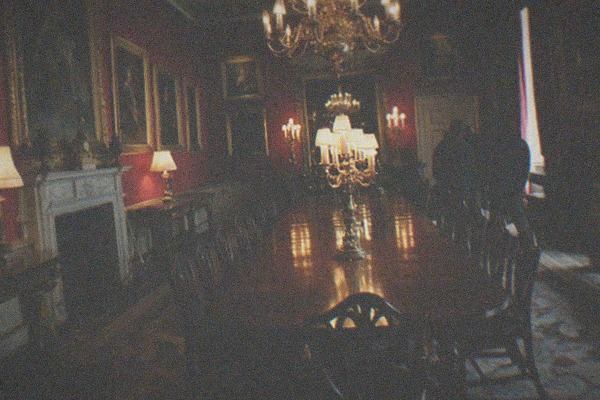
Hyde Park Corner · Wellington Museum; 'Number 1 London' with Waterloo Gallery.
Duke of Wellington's home with art collection including Velázquez and Goya.
Check latest prices Check availability →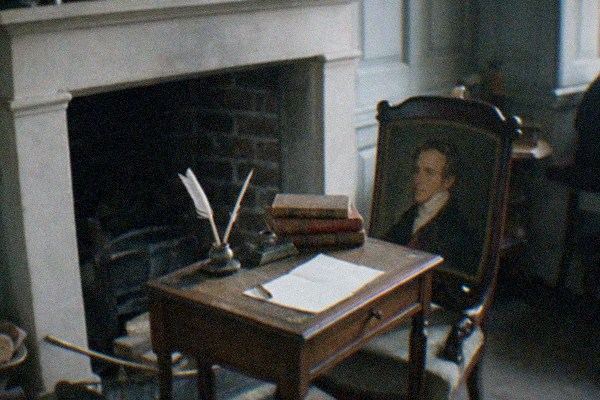
Bloomsbury, Doughty Street · Dickens' study and personal items
Former home of Charles Dickens with manuscripts and memorabilia.
Official tickets →