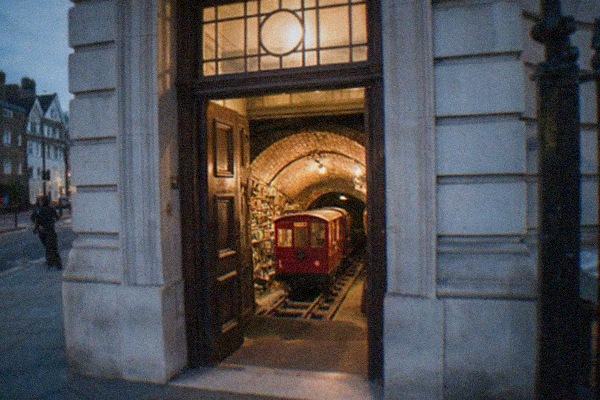
Postal Museum
Bloomsbury, Phoenix Place · Mail Rail underground ride
History of the postal service with Mail Rail ride.
from $27.77per person, live price on the listing Check availability →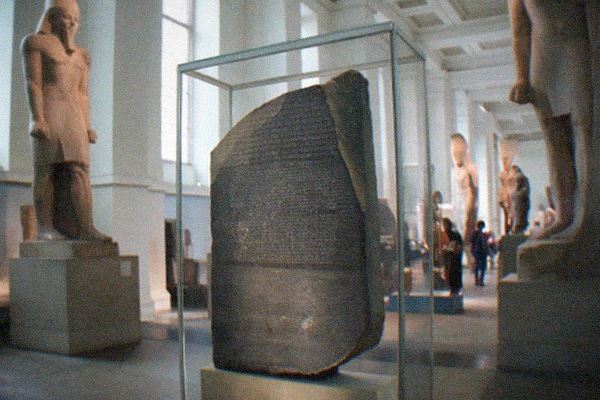
Free entry, no ticket needed.
Rosetta Stone in the Egyptian Sculpture Gallery
Plan your visit →Opens the museum's own visitor page. There is nothing to book: the permanent collection is free.
The British Museum is a world-renowned collection of human history and culture spanning two million years, housed in a grand Bloomsbury building on Great Russell Street. It suits anyone curious about ancient civilisations, from the Rosetta Stone to the Parthenon sculptures, and entry is free for all.
The centrepiece most visitors come for is the Rosetta Stone, displayed in the Egyptian Sculpture Gallery on the ground floor. Around it sit the wider Egyptian and Sudanese collections, the Greek and Roman sculpture galleries, and rooms covering two million years of human history across Africa, Asia, the Americas, Europe and the Middle East. Plan at least half a day to see the highlights properly.
The Rosetta Stone earns its fame honestly. This granodiorite slab, carved in 196 BC with the same decree in hieroglyphic, Demotic and ancient Greek script, became the key that let scholars finally decipher Egyptian hieroglyphs. It sits in Room 4, and it draws a crowd from opening time to closing, so arriving early genuinely changes the experience. The rest of the Egyptian Sculpture Gallery surrounds it with colossal statues of pharaohs and sphinxes, which gives the room a scale few other museums in the world can match.
From there, the gallery flow rewards wandering. Upstairs you will find the Egyptian mummies, perennially among the most popular displays in the building, alongside coffins, funerary objects and painted cartonnage. The Greek galleries hold the Parthenon sculptures, the controversial friezes and figures removed from the Acropolis in the early nineteenth century, displayed in a purpose-built long gallery. The Assyrian rooms, with the lamassu, the monumental winged bulls from Nineveh and Khorsabad, are another sequence people remember for years afterwards.
Beyond the ancient world, the museum spreads into medieval and modern material culture. The samurai armour and Japanese galleries sit near Chinese ceramics and the famous Admonitions Scroll, shown on rotation for conservation reasons. The African galleries, the Islamic world galleries and the Mexico and Central America rooms each hold pieces that could anchor a smaller museum on their own. The Enlightenment Gallery, in the former King's Library, preserves the eighteenth-century cabinet-of-curiosities feel of the museum's earliest days, and it is a calm place to end a visit when the busier rooms wear you down.
The building itself is part of the attraction. Robert Smirke's Greek Revival facade opens onto a forecourt that has become one of the most photographed thresholds in London, and inside, the Great Court's glass roof by Norman Foster turns the old reading-room courtyard into a covered public square. That court is where most visitors orient themselves, grab a map, and decide which wing to tackle first. The museum says its collection runs to some two million years of human history and culture, and the room numbering scheme, which you can follow on the official site, is the practical way to navigate so much material without retracing your steps.
General entry to the permanent collection is free to all visitors, year round, and no ticket is needed. You only pay for special exhibitions and some events. Booking a free timed slot in advance makes for a smoother arrival, though it is recommended rather than required for the permanent collection. Under-16s go free, with details varying by age band.
This is the single most important thing to understand about visiting the British Museum: the headline collection costs nothing. The free route covers the Rosetta Stone, the Egyptian galleries, the Parthenon sculptures, the mummies and every permanent room described above. What carries a charge is the rolling programme of special exhibitions, which changes through the year, plus certain talks, courses and evening events. If your interest is the permanent collection, you can walk away having spent nothing at all.
Timed entry is the mechanism that keeps the crowds manageable. Booking a free timed slot means you arrive within your window and skip the longest queue, and during school holidays and weekends those queues are real. If you prefer to reserve ahead and have everything arranged before you travel, the booking panel on this page lets you lock in timed entry from $9.31 USD per person; that listing carries a 4.3 rating across 978 reviews. Treat those figures as a platform price rather than the GBP door price, since entry itself is free, and check the current price on the museum's own site for anything ticketed.
| Entry Route | What It Covers | Price | Notes |
|---|---|---|---|
| General entry | Permanent collection, including Rosetta Stone and Parthenon galleries | Free, year round | No ticket needed; timed entry required |
| Advance timed slot | Same permanent collection, reserved arrival window | Free direct; listed from $9.31 USD per person on a booking platform | Recommended, not required, for the permanent collection |
| Special exhibitions | Temporary ticketed exhibitions | Check the current price on the museum's own site | Charged separately; varies by show |
| Some events | Talks, courses and evening events | Check the current price on the museum's own site | Prices vary; book individually |
| Children under 16 | All of the above entry routes | Free | Details vary by age band |
One practical note on the paid routes: special exhibitions often benefit from advance booking more than the permanent collection does, because they have finite capacity and a fixed run. If a major show is open during your dates, decide early whether it is part of your visit, because walk-up availability for popular exhibitions is not something to rely on in peak season. The museum's official website lists what is currently ticketed and what is not.
Allow two to three hours for the highlights and closer to half a day, or a full day, if you want the wider galleries at a proper pace. The Rosetta Stone, the Parthenon sculptures and the Egyptian rooms alone can absorb two hours. Arriving near opening time gives you the quietest shot at the busiest galleries, and weekday mornings are calmer than weekends.
Two million years of material culture cannot be absorbed in a flying visit, and the museum is physically large enough that the wrong route costs you time. A highlights sweep, meaning Room 4, the Parthenon gallery, the mummies upstairs and one or two rooms of personal interest, fits comfortably into two to three hours. Anything more ambitious deserves four hours plus a break, because museum fatigue in a building this size is a real phenomenon and the Great Court is where most people surrender to it with a coffee.
Timing matters more here than at most London museums. The Egyptian Sculpture Gallery fills quickly, often within the first hour of opening, so the earliest timed slots are worth the early alarm. Weekday mornings in term time are the calm window. Avoid, if you possibly can, weekends in summer and the school holiday periods, when the Great Court resembles a transport interchange at rush hour. Rainy London days push everyone indoors too, so grey afternoons are busier than the weather might suggest.
| At A Glance | Detail |
|---|---|
| Opening hours | On the museum's site |
| Closed days | On the museum's site |
| Time to allow | 2 to 3 hours for highlights; half a day or more for a full visit |
| Best time to arrive | Opening time, weekday mornings |
| Nearest station | Tottenham Court Road, Holborn and Russell Square |
| Entry price | Free for all, year round; special exhibitions and some events paid |
| Timed entry | Required; advance booking recommended but not required for the permanent collection |
| Postcode and coordinates | Great Russell Street, Bloomsbury; 51.51931, -0.12671 |
If your trip allows, a second short visit often beats one long one. Bloomsbury sits within easy reach of several other central London sights, so a morning here followed by an afternoon elsewhere, or a return trip on a quieter day, is a pattern many returning travellers settle into. The building closes earlier on some days than visitors expect, so confirm the day's hours before you plan an evening around it.
The British Museum is on Great Russell Street in Bloomsbury, central London, at coordinates 51.51931, -0.12671. The nearest Tube stations are Tottenham Court Road, Holborn and Russell Square, all within a short walk. Entry is free, booking a slot ahead is recommended rather than required, and large bags and suitcases are best avoided because of security screening and limited storage.
Tottenham Court Road station, served by the Central and Elizabeth lines plus the Northern line's recently rerouted branch, is the most common arrival point, a few minutes' walk up the street. Holborn, on the Central and Piccadilly lines, suits visitors coming from the west, and Russell Square on the Piccadilly line serves those staying in the Bloomsbury hotel district. All three approaches are flat and straightforward, though the pavements around the museum entrance fill up at opening and closing times. Bus routes along Southampton Row and New Oxford Street stop close by.
Security screening operates at the entrances, which is why the bag advice matters. Backpacks and large bags slow the queue and are not always permitted in certain galleries, and the museum has never had generous luggage storage, so travel light. Photography for personal use is generally welcome in the permanent galleries, but tripods, selfie sticks and flash cause problems in crowded rooms. Food and drink belong in the Great Court cafes rather than the galleries.
Accessibility provision is good. The main entrance on Great Russell Street is step-free, lifts serve the principal floors, and wheelchairs can be borrowed on arrival, subject to availability. Assistance dogs are welcome. If you have specific access needs, the museum's own site carries the current detail on accessible routes, hearing support and quiet provisions, and it is worth a look before you travel because provision changes as galleries are refurbished.
A word on crowd behaviour: the museum is one of the most visited in the world, and the etiquette that keeps everyone happy is simple. Move your group to the side of a gallery to confer, keep photography quick at the Rosetta Stone where others are waiting, and use the Great Court for regrouping rather than a doorway. School groups are a fixture of weekday mornings in term time, which is another reason the earliest slots feel calmer than the ten o'clock arrivals.
Bloomsbury places you within ten to twenty minutes' walk or a short Tube ride of Covent Garden, Soho, the West End theatres and Lincoln's Inn Fields. For museum lovers, the area's bookshops, squares and the Cartoon Museum fill a spare hour well. Further afield, the Postal Museum and the Painted Hall both make strong same-day pairings, each reachable in well under half an hour by Tube.
The most natural pairing stays on foot. Covent Garden's piazza and market lie about ten minutes' walk south, and the walk itself, down through Bloomsbury's squares or along Shaftesbury Avenue, is a pleasant way to decompress after gallery fatigue. Soho's restaurants and the theatre district sit just beyond, which makes the British Museum an easy morning fixture before a matinee. Lincoln's Inn Fields, one of London's largest squares, is a quiet green escape two minutes to the east, ideal for a picnic lunch if the weather cooperates.
If you want a second museum on the same ticket-free logic, there are options in several directions. East toward Clerkenwell, the Postal Museum makes an excellent family companion piece, with its rides on the Mail Rail underground railway and hands-on displays that suit children brilliantly after a morning of ancient stone. Downriver in Greenwich, though a longer commitment, the Painted Hall at the Old Royal Naval College offers ceiling painting on a scale that visitors often compare, fairly or not, to the grandest interiors in Europe, and it pairs nicely with a Greenwich day out. If you are heading toward Hyde Park Corner instead, Apsley House, the Duke of Wellington's former home, adds a collector's palace of fine and decorative art to an itinerary that already leans towards the historical.
For a lower-effort filler, Bloomsbury itself rewards slow looking. The British Library, a fifteen-minute walk up towards St Pancras, displays original manuscripts from the Magna Carta to Beatles lyrics in its free Treasures Gallery, and the secondhand bookshops of Charing Cross Road run between the museum and Leicester Square. A day built around Great Russell Street can easily end without a single extra train journey, which, after a crowded morning in the Egyptian galleries, is exactly what most visitors want.
Book a free timed slot, arrive close to opening, allow half a day, and treat the Rosetta Stone as your first stop before the crowds build. Entry costs nothing, so your only real decisions are which special exhibition, if any, to pay for and how much of the permanent collection you can honestly fit in. Everything else is logistics, and Bloomsbury makes the logistics easy.
The repeat pattern among people who enjoy this museum most is the multi-visit approach. London visitors with several days in the city often do one highlights pass on a first day, then return on a quieter morning for the galleries they missed, whether that is Japan, the Enlightenment Gallery or the Assyrian rooms. Because entry is free year round, a return visit costs nothing but time, which is a rare luxury among world-class museums.
For families, the free entry for under-16s and the abundance of gallery activities make this one of the better-value days out in central London, though small children will want the mummies and the Great Court rather than two million years of steady progression. For solo visitors and researchers, the sheer density of the collection rewards a map and a short list. Whatever your route in, the practical details above, hours, current exhibitions and any access provision, live on the museum's official site, and a five-minute check there the night before is the difference between a smooth arrival and a queue in the rain.
Yes. Entry to the permanent collection is free to all visitors, year round, and no ticket is needed for general entry. You only pay for special exhibitions and some events. Booking a free timed slot in advance is recommended for a smoother arrival, though it is not required.
Advance booking is recommended but not required for the permanent collection. Reserving a free timed slot helps you avoid the longest queues, especially at weekends and during school holidays. Special exhibitions are charged separately and often benefit from being booked ahead.
General entry costs nothing, year round. A booking platform lists timed entry from $9.31 USD per person, but that is a platform from-price, not the GBP door price, and the listing is rated 4.3 across 978 reviews. For special exhibitions and events, check the current price on the museum's own site.
Its hallmark is the Rosetta Stone, displayed in the Egyptian Sculpture Gallery on the ground floor. The museum is a world-renowned collection of human history and culture spanning two million years, including the Parthenon sculptures, Egyptian mummies and extensive Asian, African and Middle Eastern galleries.
Yes, under-16s go free, with details varying by age band. Combined with free general entry for everyone, this makes the museum a strong-value family day out. Timed entry still applies, so families should book slots in advance, particularly during school holidays when the building is busiest.
Allow two to three hours for the highlights, including the Rosetta Stone, the Parthenon gallery and the mummies, and half a day or more for a fuller visit. The collection covers two million years of human history, so a highlights sweep plus one or two rooms of personal interest suits most first visits.
It sits on Great Russell Street in Bloomsbury, central London, at coordinates 51.51931, -0.12671. The nearest Tube stations are Tottenham Court Road, Holborn and Russell Square, all within a short walk. Buses along Southampton Row and New Oxford Street stop nearby.
Yes, special exhibitions and some events carry a charge separate from the free permanent collection. Prices vary by show, so check the current price on the museum's own site before you visit. Popular exhibitions can sell out, so advance booking is wise for anything ticketed during your dates.
Bloomsbury, Phoenix Place · Mail Rail underground ride
History of the postal service with Mail Rail ride.
from $27.77per person, live price on the listing Check availability →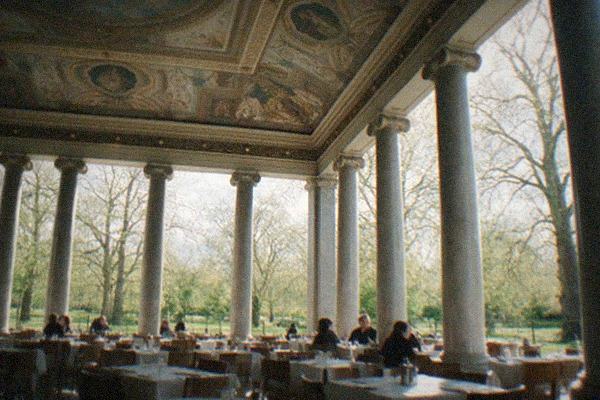
Greenwich · Europe's finest Baroque interior.
Baroque masterpiece at Old Royal Naval College with ceiling murals.
from $23.71per person, live price on the listing Check availability →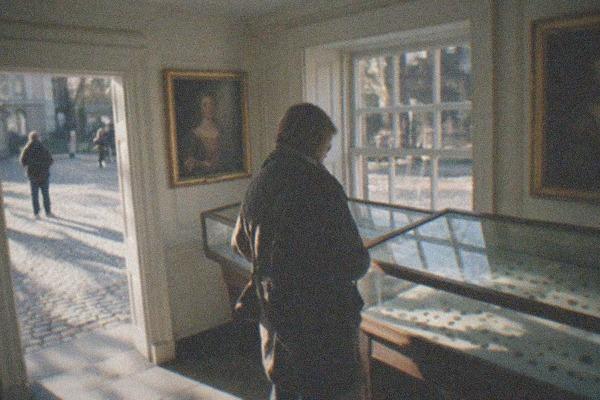
Bloomsbury, Brunswick Square · Artefacts and art from the Foundling Hospital
History of the Foundling Hospital and children's welfare.
Official tickets →