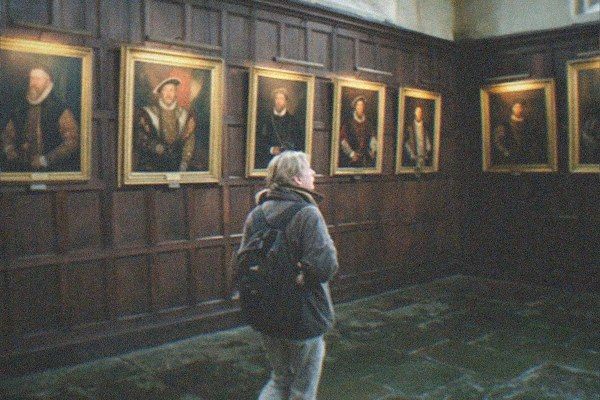
National Portrait Gallery
Westminster, St Martin's Place · Tudor portraits
Portraits of historically important and famous British people.
Free entry, no ticket needed.
Free entry, no ticket needed.
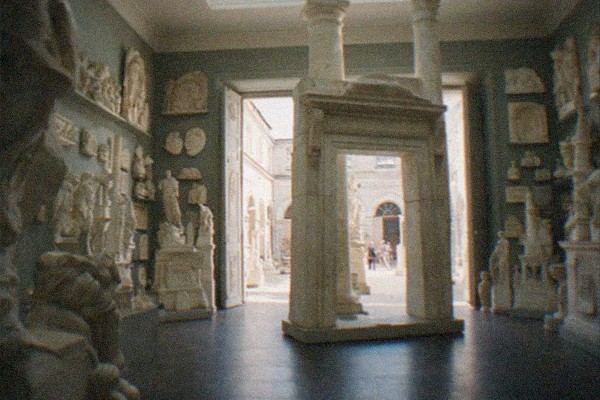
Cast Courts with plaster casts of Trajan's Column
Plan your visit →Opens the museum's own visitor page. There is nothing to book: the permanent collection is free.
The Victoria and Albert Museum in South Kensington is the world's largest museum of applied and decorative arts, spanning sculpture, fashion, ceramics, jewellery and design across millennia. It suits anyone interested in how objects are made and why they matter, from casual browsers to design students on their third visit of the week.
The V&A holds the world's largest collection of applied and decorative arts: over two million objects spanning 5,000 years of human making, from Renaissance sculpture to contemporary fashion. Its defining spectacle is the Cast Courts, two soaring galleries containing full-scale plaster casts of European monuments, including Trajan's Column from Rome, shown in two stacked sections because the real thing would not fit the room.
The Cast Courts are the museum's signature experience and the reason many first-time visitors remember the building at all. In the late nineteenth century, when international travel was slow and expensive, museums commissioned exact plaster reproductions of famous monuments so that people could study them without leaving Britain. The casts were made by taking moulds directly from the originals, which means their surface detail is astonishingly faithful. Trajan's Column is the centrepiece: the original in Rome stands about thirty-five metres tall, so the museum displays its cast in two pieces, one atop the other, and even then the upper section sits proud of the gallery floor below. Visitors can walk around the base and read the spiral reliefs that narrate the Dacian Wars, effectively touring a Roman monument at eye level, indoors, for free.
Beyond the casts, the collection branches in every direction. The fashion galleries trace dress from the eighteenth century to the present and rank among the best in the world. The jewellery gallery runs more than 3,000 pieces from antiquity to the modern era. Ceramics and glass fill dedicated wings. The medieval and Renaissance galleries connect into the Cast Courts themselves, and the British Galleries, rooms 52 to 57, walk you through four centuries of British design, from Tudor panelling to Arts and Crafts furniture. There is also a substantial photography collection and a rotating programme of design displays.
Scale matters here. The building is a long Victorian complex of courts, corridors and staircases, and the visitor route is not a single loop. It helps to accept that you will not see everything in one visit. Most people pick two or three areas and do them properly. The [official site](https://www.vam.ac.uk/) publishes floor plans and a 'what's on' listing that shows which galleries are open on any given day, which is worth a look before you travel, since individual galleries occasionally close for reinstallations.
General admission to the V&A is free to all, year round, and no ticket is needed for the permanent collection. Paid exhibitions and some events carry separate charges, and under-18s are generally free or reduced for those exhibitions. Third-party platforms sell admission-linked listings from around $27.09 USD per person, but that figure reflects platform pricing, not what the museum itself charges.
The simplest entry route is to arrive and walk in. The free admission covers the permanent galleries, including the Cast Courts, the British Galleries, fashion, jewellery, ceramics, silver and everything else on the main floors. There is no timed slot, no reservation and no queue-jumping purchase for this core visit, though at peak times, especially weekends and school holidays, the entrance hall can be busy regardless.
Where money enters the picture is the temporary exhibition programme. Major shows, staged in dedicated exhibition spaces, are ticketed separately and often book out in advance for popular slots. This is the only part of a visit that genuinely benefits from booking ahead, and prices for these shows vary by exhibition, so check the current price on the museum's own site for the specific show you want. Some talks, courses and late events also carry fees.
A number of ticketing platforms resell V&A experiences, and one major listing shows a from-price of $27.09 USD per person with a rating of 2.4 across 100 reviews. Treat both figures carefully. A platform from-price is not the GBP door price and is rarely the cheapest route; the rating reflects experiences booked through that platform rather than the museum itself, and a 2.4 average across 100 reviews is a meaningful warning worth weighing before you prepay a reseller for a museum that admits you free at the door.
| Entry Route | Cost | What It Covers | Booking Needed? |
|---|---|---|---|
| General admission | Free | All permanent galleries, including Cast Courts | No |
| Temporary exhibitions | Paid, varies by show | One ticketed exhibition | Yes, via the museum's site |
| Children (under-18s), exhibitions | Generally free or reduced | Exhibition entry | On the museum's site |
| Events and talks | Paid, varies | Individual event | On the museum's site |
| Reseller listings | From $27.09 USD per person (platform from-price) | Platform package, not the GBP door price | Platform rated 2.4 across 100 reviews |
Practical advice is short: for a general visit, do nothing in advance and enjoy free entry. For a specific major exhibition, book through the museum's own site once you know the show's dates and prices. Third-party bundles make sense only if they bundle something you actually want, such as transport or a guided element, and the mixed platform ratings suggest reading the fine print first.
Allow at least two to three hours for a focused visit covering two or three collection areas, and half a day or more if exhibitions are on your list. Midweek mornings are the quietest window. Weekends, school holidays and the first weeks of a headline exhibition are the busiest.
The V&A rewards depth over speed, and its layout works against a sprint visit. The Cast Courts alone, plus the adjoining medieval and Renaissance galleries, comfortably absorb an hour if you read anything at all. If your interest is fashion or British design, budget similar time for those wings. A visitor who tries to see the whole museum in one pass tends to remember staircases more than objects.
Timing matters more here than at smaller museums because South Kensington draws heavy family and tourist traffic. Late weekday afternoons are usually calmer than weekends, and the museum runs late openings on certain evenings, a genuinely pleasant way to see galleries without crowds; check the schedule on the museum's site for current days and times, since these vary by season. During school holidays expect the family-friendlier galleries, particularly the Cast Courts and the Sackler education areas, to be livelier mid-morning.
Seasonally, the run-up to Christmas brings high footfall to South Kensington generally, and summer weekends pair the museum with crowds from the nearby parks. If your trip allows flexibility, a Tuesday or Wednesday morning is about as reliable as London museum-going gets. If you are pairing the V&A with the [National Gallery](/national-gallery-tickets/) on the same day, do the V&A in the morning and head north afterwards, since Trafalgar Square is a short tube ride away on the Piccadilly line with one interchange, or a pleasant walk through Hyde Park and St James's if the weather holds.
| At A Glance | Details |
|---|---|
| Opening hours | On the museum's site |
| Closed days | On the museum's site |
| Time to allow | 2 to 3 hours minimum |
| Nearest station | South Kensington (underground) |
| Address | Cromwell Road, South Kensington |
| Entry price | Free, permanent collection |
| Exhibitions | Paid, book on the museum's site |
| Official site | vam.ac.uk |
One planning note worth flagging as a reader service: because free entry means no booking barrier, the practical thing to reserve ahead of your trip is any ticketed exhibition slot, and you can compare live availability and prices for that, plus other London museum options, in the booking panel on this page before you commit.
The V&A sits on Cromwell Road in South Kensington, a short walk from South Kensington underground station on the Piccadilly, Circle and District lines. The museum is step-free via its Cromwell Road entrance, offers accessible toilets and lift access to the principal floors, and provides large-print and audio content. Expect a bag check on arrival.
South Kensington station is roughly a five to ten minute walk, and the route is signposted and mostly flat. If you prefer to stay underground for part of it, a subway tunnel links the station towards the museum quarter, which is useful in rain, though sections involve stairs. Buses serve South Kensington and Cromwell Road from across west and central London, and cycling racks exist near the Cromwell Road entrance. Taxis and rideshares drop directly on Cromwell Road, though traffic on that stretch can be slow at rush hour.
Access provisions are well developed. Wheelchair users and visitors with mobility needs can enter level from Cromwell Road, and lifts connect the main galleries, though some older court-level staircases cannot be avoided in every part of the building. The museum lends wheelchairs, run accessible events and provide hearing support in the auditorium; current specifics, including assistance dog policy and quiet-route guidance, live on the museum's accessibility pages. Visitors with disabilities can usually book a free companion ticket for paid exhibitions, an arrangement consistent with national museum practice, and the details for each show are on the museum's site.
Security is a standard airport-style bag check at the door. Large suitcases and bulky items are generally not permitted, and there are left luggage facilities nearby in South Kensington rather than generous storage inside; check the museum's site before arriving with luggage. Photography without flash is usually allowed in permanent galleries, but exhibition spaces often prohibit it. There is a café and a courtyard garden, both pleasant places to decompress between gallery runs, and the museum shop is one of the better design shops in London if you are the souvenir type.
Groups and school parties are common, particularly mid-morning in term time. Solo visitors who dislike crowds should read this as confirmation of the midweek-afternoon strategy above.
The V&A sits at the heart of London's densest museum quarter. The Natural History Museum and the Science Museum are on the same street, Exhibition Road, each a two to five minute walk away. Kensington Gardens, Hyde Park and the Royal Albert Hall are within ten to fifteen minutes on foot, making a full South Kensington day easy to assemble.
Exhibition Road is effectively a museum campus. If your group has mixed interests, one person can take the dinosaurs at the Natural History Museum while another works through the Cast Courts, and both walks are minutes apart. This also makes the V&A a natural rain-day anchor, since you can arrive at South Kensington station, use the tunnel, and spend hours indoors. For a two-museum day with contrast, the V&A plus the Science Museum pairs applied art with industry and machinery, a combination children tend to enjoy more than any single large museum.
If your London itinerary leans towards art rather than science, the pairing options widen. Central London's great painting collections are a short tube hop north. The [National Gallery](/national-gallery-tickets/) covers the old masters in Trafalgar Square, while the [Courtauld Gallery](/courtauld-gallery-tickets/) at Somerset House offers a more compact and intimate run of Impressionist and Post-Impressionist works, and both sit on the Piccadilly line corridor or a brief bus ride away. For contemporary art with a design-forward tilt, the [Moco Museum](/moco-museum-london-tickets/) adds a modern counterpoint to the V&A's historic depth.
Closer to hand, Kensington Gardens and Hyde Park fill the gaps between museum slots nicely, and the Royal Albert Hall is worth a look from the outside even without a concert ticket, since the building's terracotta frieze echoes the V&A's own Victorian architectural language. Refreshment in the area is straightforward: South Kensington's Gloucester Road end has cafés and pubs away from the heaviest tourist strip, and the museum's own courtyard café saves you leaving the building at all when the weather is poor.
The practical summary: build the day around one anchor museum, add the V&A's free permanent galleries, and reserve ahead only for whatever ticketed show you genuinely want. Everything else in South Kensington rewards spontaneity.
No. General admission is free to all, year round, and no ticket is needed for the permanent collection, including the Cast Courts. Booking is only relevant for temporary exhibitions and some events, which carry separate charges and can sell out, so reserve those through the museum's own site.
Entry to the permanent galleries is free. Paid exhibitions and events vary in price by show, so check the current price on the museum's own site for the specific exhibition. A booking platform lists admission from $27.09 USD per person, but that is a platform from-price, not the GBP door price for a visit that is otherwise free.
Yes, if you focus. The Cast Courts, the museum's hallmark, can be reached and absorbed in under an hour and are the single most memorable space in the building. Allow two to three hours to add fashion, jewellery or the British Galleries, or half a day with a ticketed exhibition.
Under-18s need no booking for free general admission and are generally free or reduced for paid exhibitions. Family-friendly spaces include the Cast Courts, where the full-scale Trajan's Column cast tends to hold children's attention, and the museum's dedicated education areas.
Think carefully. One major platform listing starts at $27.09 USD per person and carries a rating of 2.4 across 100 reviews, and that figure is a platform from-price rather than a GBP door price. Since general admission is free, a reseller ticket only makes sense if it bundles something you actually want beyond basic entry.
It is the world's largest museum of applied arts, design and decorative arts, with over two million objects. Its hallmark is the Cast Courts, home to full-scale plaster casts of European monuments including Trajan's Column, displayed in two stacked sections because the original's full height would not fit the gallery.
South Kensington underground station, on the Piccadilly, Circle and District lines, is a short walk from the Cromwell Road entrance, and a subway tunnel links the station towards the museum quarter. The address is Cromwell Road, South Kensington, and the museum is step-free via its main entrance.
Midweek mornings are typically quietest, while weekends, school holidays and the opening weeks of a headline exhibition bring the biggest crowds. Late openings on certain evenings offer a calmer visit; check the current schedule on the museum's site before planning.
Westminster, St Martin's Place · Tudor portraits
Portraits of historically important and famous British people.
Free entry, no ticket needed.
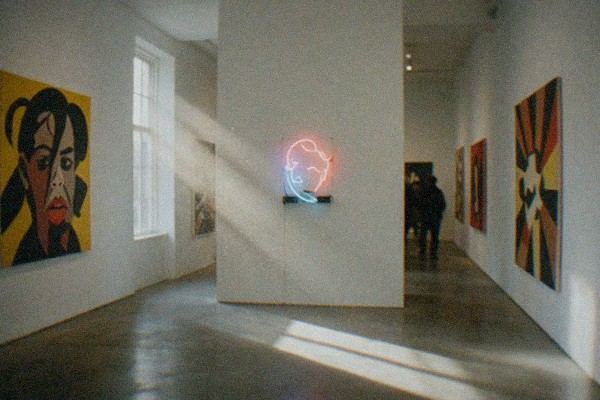
Marble Arch · Immersive digital and street art experiences.
Modern and contemporary art with Banksy, Basquiat, Warhol, Kusama.
from $31.02per person, live price on the listing Check availability →
Somerset House · Manet, Monet, Van Gogh, and Gauguin masterpieces.
Impressionist and Post-Impressionist art in Somerset House.
from $18.97per person, live price on the listing Check availability →