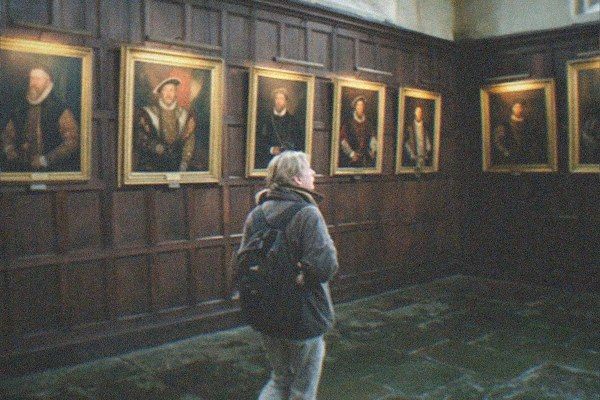
National Portrait Gallery
Westminster, St Martin's Place · Tudor portraits
Portraits of historically important and famous British people.
Free entry, no ticket needed.
Free entry, no ticket needed.
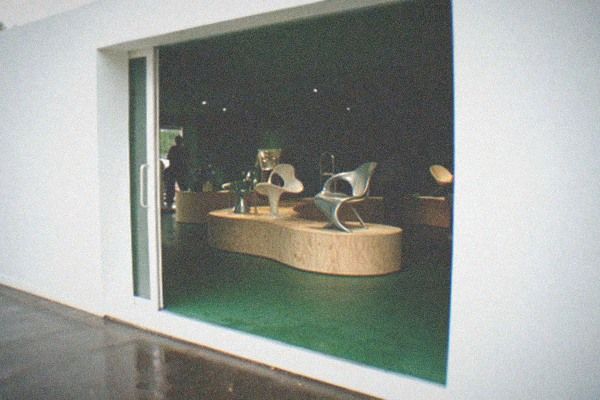
Geometric glass facade and temporary design shows
Plan your visit →Opens the museum's own visitor page. There is nothing to book: the permanent collection is free.
The Design Museum in Kensington is a museum of contemporary design, architecture and innovation, housed in a striking geometric glass building on Kensington High Street. It suits anyone curious about how objects, buildings and graphics are made, and it costs nothing to walk in.
The museum's hallmark is its geometric glass facade, a remodelled 1960s building by John Pawson, and its rolling programme of temporary design exhibitions. The permanent collection display is free, as is entry to the building itself, so you can see the architecture and the free galleries without paying anything at all.
The building is a big part of the draw. The structure began life as the Commonwealth Institute, a 1962 landmark with a distinctive parabolic roof, and was stripped back and rebuilt by minimalist architect John Pawson before the museum moved in from Bermondsey in 2016. The result is a light-filled atrium with oak floors, exposed concrete and views between floors that let you read the whole building at a glance. Even the staircases are photographed constantly, and design fans often come just to see the architecture.
Inside, the content is about the designed world: product design, graphics, fashion, digital work, architecture and engineering. The free permanent display, Designer Maker User, fills the top floor and tells the story of modern design through around a thousand objects, from London tube maps and anglepoise lamps to furniture, typefaces and everyday packaging. It is object-dense rather than interactive, and it rewards slow looking rather than a quick dash through.
Alongside that sit the temporary shows, which are the museum's real calling card. Recent years have covered designers, movements and themes across fashion, furniture, electronic music graphics and urban futures, and these ticketed exhibitions are where the museum puts its biggest budgets and its most ambitious installations. If your visit is built around a specific exhibition, check what is currently running on the museum's own site before you go, as the programme changes several times a year.
The audience skews curious rather than specialist. You do not need a design degree to enjoy it, and the labelling does a decent job of explaining why each object matters. Families get on fine with the free galleries, students come to sketch the building, and it works well as a rainy-afternoon stop on a Kensington itinerary.
Entry to the Design Museum is free to all, year round, and you do not need a ticket to get into the building or the permanent collection. What still costs money are some temporary exhibitions and certain events. For those, under-18s get in free or at a reduced rate, and advance booking is recommended.
This is a genuinely free museum, not a suggested-donation museum. You walk in off Kensington High Street, you go up to the free collection display, and nobody asks you for anything. That makes it one of the easier major London museums to visit on impulse: no queuing for timed slots, no planning around ticket releases, no checking a calendar weeks ahead unless a headline exhibition is part of your plan.
The paid layer sits on top of that. Big temporary exhibitions are individually ticketed, and prices vary by show, so check the current price on the museum's own site rather than relying on any figure printed elsewhere. The same applies to talks, workshops and design courses, which are run as paid events. Booking exhibitions in advance is the museum's own recommendation, especially for popular opening and closing weeks.
| Item | Price | Notes |
|---|---|---|
| General museum entry | Free | No ticket needed, year round |
| Permanent collection display | Free | Included with museum entry |
| Temporary exhibitions | on the museum's site | Some exhibitions are ticketed; prices vary by show |
| Under-18s at exhibitions | Free or reduced | Advance booking recommended |
| Talks, courses and events | on the museum's site | Varies by event |
If you want to compare this free-entry model with other London institutions, the pattern is familiar: the National Gallery and the Courtauld Gallery both charge nothing for their core collections while ticketing special shows, though the Courtauld's permanent galleries are paid, so it is worth checking each page before you build an itinerary. Full current exhibition pricing is always listed at designmuseum.org.
Allow around 90 minutes to two hours for the free galleries and the building itself, and add roughly an hour per paid exhibition if you are seeing one. The museum is quieter on weekday mornings and, being on a busy shopping street, it is at its most crowded on weekend afternoons, especially when a headline show is running.
The visit is naturally sequenced. Most people start in the atrium, take in the architecture, then ride to the top floor for the permanent display and work downward, which spreads out the crowds and gives you the big atrium views as you descend. The free collection is a single large gallery rather than a maze, so you can spend as little as 30 minutes with it and still leave with something, or linger for an hour if you read the labels properly.
Opening hours are published by the museum and do change around exhibition launches and private events, so confirm the day's hours on the official site before travelling, particularly around Christmas and bank holidays. There is no need to time your arrival for a free entry slot, since there is no slot system for the permanent galleries. The practical advice is simple: arrive before midday on a weekday if you want the calmest rooms, and expect company at weekends.
Timing within the year matters less here than at the big nationals, because the free galleries do not have blockbuster seasonal spikes of their own. The one exception worth planning around is the exhibition calendar: if a temporary show has been widely reviewed, its opening weeks and final weekends will pull the biggest crowds into the whole building, including the free floors. Checking the museum's what's-on page a week or two ahead is usually enough to pick a quieter day.
Free entry, no ticket needed, Kensington High Street location, 90 minutes to two hours for a comfortable visit. The museum covers contemporary design, architecture and innovation, with paid ticketed exhibitions on top of a free permanent collection. All operational details, including daily hours, should be confirmed on the museum's own site.
| Detail | Information |
|---|---|
| Entry price | Free to all, year round |
| Temporary exhibitions | Some paid; check current price on the museum's site |
| Location | Kensington, Kensington High Street |
| Opening hours | on the museum's site |
| Closed days | on the museum's site |
| Time needed | 90 minutes to 2 hours, plus an hour per exhibition |
| Best for | Design, architecture and modern visual culture |
| Official site | designmuseum.org |
The table above is deliberately conservative. Hours at London museums shift between seasons, and the Design Museum also hosts evening events that can affect late openings, so treat the official site as the single source of truth for the day you plan to visit. Everything else here, the free entry, the location and the suggested visit length, is stable year to year.
One more practical point: because entry costs nothing, this is one of the few major museums where you can change your plans at the door without losing anything. If you arrive and the queue for a paid exhibition is long, you can simply do the free galleries and come back another day for the show. That flexibility is worth having on a packed London itinerary.
The museum sits on Kensington High Street in west London, a short walk from the Underground stations that serve the street. Free entry means no ticket collection or timed arrival, and the building is a purpose-converted landmark with step-free access throughout. Bags and accessibility details should be confirmed on the museum's site before your visit.
Kensington High Street Underground station is the obvious arrival point, on the Circle and District lines, and the walk to the museum is a few minutes along the street itself. High Street Kensington is also well served by buses along the street, and cycling routes reach the area from central London. If you are driving, do not plan on it: Kensington High Street is in the congestion charge zone's reach and parking is scarce, so use the Tube. The museum's exact position is at coordinates 51.49992, -0.20016, useful for anyone navigating with a map app or arranging a taxi pickup.
The building was converted for accessible use, with lifts connecting all public floors, so wheelchair users and anyone avoiding stairs can reach the top-floor permanent display easily. Visitors requiring assistance should check the museum's access pages for current facilities, including accessible toilets and any companion arrangements, since specifics beyond the step-free circulation are best confirmed directly with the museum rather than assumed.
On bags: London museums generally ask large luggage to be left behind, and the Design Museum is no exception, but the current bag policy and any cloakroom arrangements are published by the museum, so check before arriving with suitcases. Photography is normally permitted in the free galleries, with restrictions inside temporary exhibitions, which is standard across London institutions; signage on the day is the reliable guide.
Pushchairs are usually fine in the permanent gallery, and the free entry means there is no ticket to forfeit if a young visitor has a meltdown and you have to leave. That low-stakes quality is one of the underrated practical advantages of the museum's pricing model.
The Design Museum sits in Kensington, within walking distance of Holland Park and Kensington Gardens, and a short Tube ride from South Kensington's museum quarter. The strongest pairings are green space and architecture nearby, or a gallery visit in central London, and the free entry means the museum slots easily into a longer day without adding cost.
On foot, Holland Park is the immediate neighbour to the north, with its Kyoto Garden, peacocks and quiet lawns, and it makes the natural first stop on a fine day before moving indoors. Kensington High Street itself is one of west London's main shopping streets, so this museum suits a day that mixes retail with culture. Walk east and you reach Kensington Gardens and Hyde Park, whose landscaped stretches and the Albert Memorial make a longer but pleasant walk for anyone with the energy.
A short hop on the Circle or District lines takes you to South Kensington, where the Natural History Museum, the Science Museum and the V&A cluster together. All three are also free at entry, so a Design Museum morning followed by a South Kensington afternoon is one of the better-value full days in London. The V&A in particular pairs naturally here, since its decorative arts collections put centuries of designed objects against the Design Museum's contemporary focus.
If you want to extend the contemporary theme back into the West End, the Moco Museum offers modern and street art in a ticketed setting, a different pricing model but a similar audience, and it can be combined with shopping or sightseeing in the centre. For classic rather than contemporary work, the National Gallery on Trafalgar Square costs nothing to enter and anchors an art-focused route through central London, with the Courtauld Gallery at Somerset House a short walk beyond it.
Practically, Kensington works best as a half-day zone: museum, Holland Park, and a wander along the High Street will fill four comfortable hours, and the Design Museum's free entry and café culture make it an easy anchor. Because you never need to book ahead for the free parts, it also works as a flexible fallback if the weather turns during a park visit.
Yes. Entry is free to all, year round, and no ticket is needed for the building or the permanent collection display. You simply walk in from Kensington High Street. The only things that still cost money are some temporary exhibitions and certain events such as talks and workshops.
Not for free entry, since no ticket is required for the museum or its permanent collection. For ticketed temporary exhibitions, advance booking is recommended by the museum, particularly for popular shows, and under-18s get free or reduced admission at exhibitions.
Prices vary by exhibition, and there is no single figure worth printing here. Check the current price on the museum's own site at designmuseum.org before your visit. Children and under-18s are admitted free or at a reduced rate for exhibitions.
Roughly 90 minutes to two hours covers the free galleries and time to appreciate the building's geometric glass facade and atrium. If you add a paid temporary exhibition, allow about an extra hour per show. Weekday mornings are quieter than weekend afternoons.
It is on Kensington High Street in Kensington, west London, at coordinates 51.49992, -0.20016. High Street Kensington Underground station, on the Circle and District lines, is a short walk away, and buses run along the street. Driving is not recommended as parking is scarce.
Contemporary design, architecture and innovation. The free permanent display, Designer Maker User, presents around a thousand objects covering product design, graphics, fashion and more, while rolling temporary exhibitions are the museum's hallmark alongside its striking geometric glass facade.
The museum is housed in a landmark 1960s building converted by architect John Pawson, with lifts serving all public floors and step-free circulation. Specific facilities such as accessible toilets and companion arrangements should be confirmed on the museum's own site before visiting.
Holland Park and Kensington Gardens are within walking distance, and the free South Kensington museums, including the V&A, are a short Tube ride away. Because entry costs nothing, the museum slots easily into a longer Kensington day without adding to your budget.
Westminster, St Martin's Place · Tudor portraits
Portraits of historically important and famous British people.
Free entry, no ticket needed.
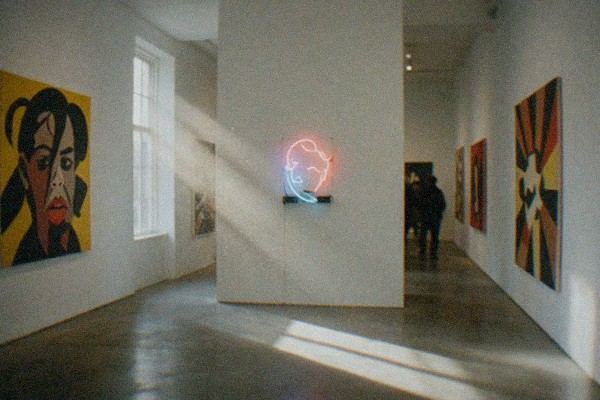
Marble Arch · Immersive digital and street art experiences.
Modern and contemporary art with Banksy, Basquiat, Warhol, Kusama.
from $31.02per person, live price on the listing Check availability →
Somerset House · Manet, Monet, Van Gogh, and Gauguin masterpieces.
Impressionist and Post-Impressionist art in Somerset House.
from $18.97per person, live price on the listing Check availability →